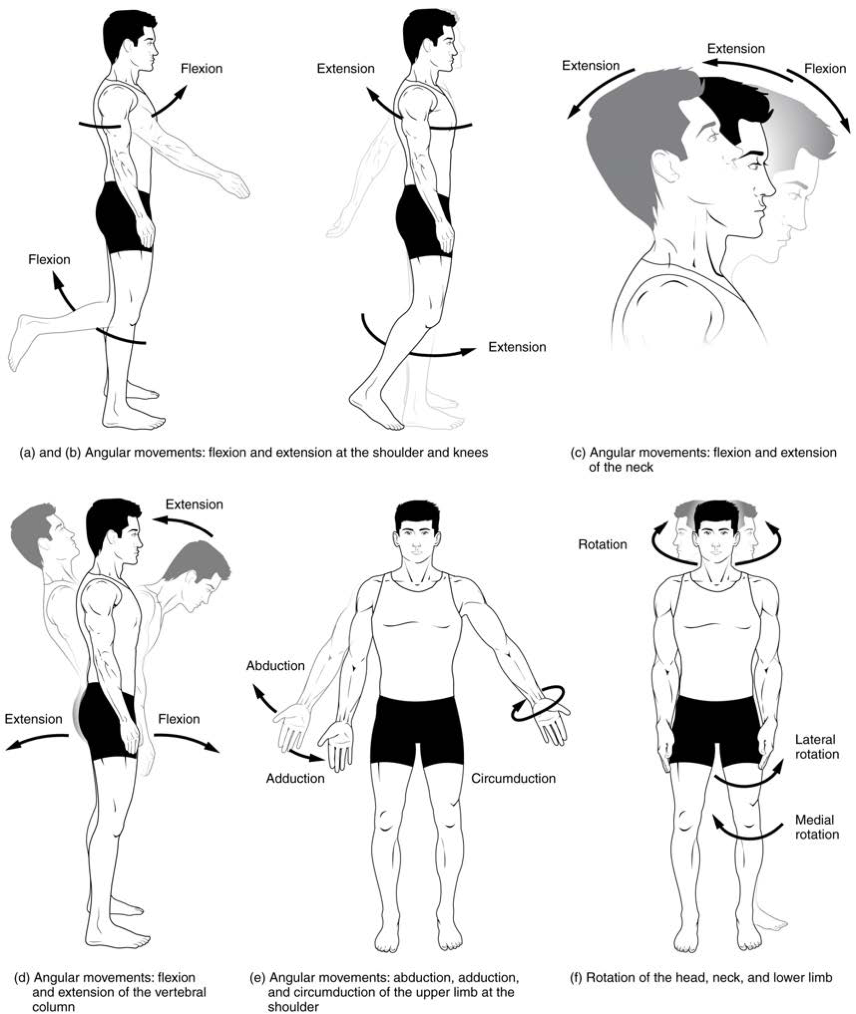
Abduction
and adduction motions occur within the coronal plane and involve medial-lateral
motions of the limbs, fingers, toes, or thumb.
Abduction moves the limb
laterally away from the midline of the body,
Adduction is the opposing
movement that brings the limb toward the body or across the midline.
For
example, abduction is raising the arm at the shoulder joint, moving it
laterally away from the body, while adduction brings the arm down to the side
of the body. Similarly, abduction and adduction at the wrist moves the hand away
from or toward the midline of the body. Spreading the fingers or toes apart is
also abduction, while bringing the fingers or toes together is adduction. For
the thumb, abduction is the anterior movement that brings the thumb to a 90°
perpendicular position, pointing straight out from the palm. Adduction moves
the thumb back to the anatomical position, next to the index finger. Abduction
and adduction movements are seen at condyloid, saddle, and ball-and-socket
joints (Picture 1 e).